






















Los Artículos sobre Mascotas (Perros o Gatos) de PETSmania
Ir a indice de Artículos
Perro de Pastor de Europa del Sureste
Estandar de la Raza Perro de Pastor de Europa del Sureste
Por :
Hainaut (Bélgica)
Seccion:
FCI-Standard N° 357 / 19.05.2009/ EN
SOUTHEASTERN EUROPEAN SHEPHERD
(Ciobanesc Romanesc de Bucovina)
TRANSLATION: RKC & SKC, revised by Jennifer Mulholland.
ORIGIN: Southeastern Europe.
PATRONAGE: Romania and Serbia.
DATE OF PUBLICATION OF THE OFFICIAL VALID STANDARD: 26.03.2009.
UTILIZATION: Guardian for flocks and an excellent watchdog.
FCI-CLASSIFICATION:
Group 2 Pinscher & Schnauzer, Molossoids breeds, Swiss Mountain and Cattle dogs.
Section 2.2 Mountain type Molossoids.
Without working trial.
BRIEF HISTORICAL SUMMARY:
It is a natural breed with its origin in the Carpathian Mountains (Romania and Serbia) and the South of Danube (some regions of Bulgaria). Special attention for the development of the breed arose in the regions of northeastern Romania, the county of Bucovina as well as in the South of the Danube (Serbia) : the well-known transhumance areas of the shepherds since immemorial times. Selection and improvement have lead to the actual type. The breed is successfully used both for defending the flocks and herds and as watchdogs for households in the mentioned regions.
GENERAL APPEARANCE:
Large sized dog; commanding, haughty and proud. The breed has an obvious sexual dimorphism.
IMPORTANT PROPORTIONS:
The length of the body is slightly superior to the height at the withers. The length of the skull is equal to the length of the muzzle.
BEHAVIOUR/CHARACTER:
Balanced, calm and loyal, he likes children. It is a very good guardian for flocks, courageous and a real fighter against the possible animals of prey (bear, wolf, and lynx). It has a strong bark. When strangers or animals approach, its barking is very strong, with a low tonality. During the night, it patrols around the household or the flock/herd.
HEAD: Massive but not heavy, slightly higher than the topline.
CRANIAL REGION :
Skull: Moderately wide, slightly domed. The upper profile of the skull and muzzle are slightly divergent. Viewed from the front, the skull is slightly domed, seen from the side it is almost flat.
Skull width: males 16-18 cm, females 15-17 cm, zygomatic arches are moderately developed. Occipital protuberance is slightly evident.
Stop: Slightly pronounced.
FACIAL REGION :
Nose: Large, well developed, black.
Muzzle: Blunt, of the same length as the skull; well developed, narrowing progressively towards the nose but never pointed; strong mandible.
Lips: Thick and tight, strong pigmentation.
Jaws/Teeth: Strong jaws; complete dentition, strong, healthy and white teeth, well set; scissor bite. Pincer bite is tolerated.
Cheeks: Not prominent.
Eyes: Small related to the head; almond-shaped and obliquely, brown or slightly light but never yellow. Eyelids well pigmented.
Ears: Relatively high set, “V” shaped with slightly rounded tip, pendent and carried close to cheeks. Cropping is prohibited.
NECK: Medium length, large and strong, without dewlap.
BODY: Good stamina.
Topline: Horizontal.
Withers: Slightly evident.
Back: Strong and muscular.
Loin: Muscular and strong.
Croup: Muscular and moderately inclined towards base of tail.
Chest: Broad and deep, descending to elbows, well sprung ribs.
Underline: Slightly ascendant.
TAIL: High set-on. At rest, it is pendent; reaching to or lower than the hock; when the dog is alert or in action the tail is raised up to the level of the back or slightly above it, with slight upward curve, but never curled over the back. Docking is prohibited.
LIMBS:
FOREQUARTERS:
General appearance: Upright, seen from the front or the side. Shoulders: Long, oblique, well muscled and firmly attached to the body. Scapular-humeral angle approximately 100-110°.
Upper Arm: Moderately long, muscular.
Elbow: Close to the body, free movement.
Forearm: Strong, not too long.
Carpus (wrist): Strong.
Pastern: Short, slightly slanting.
Forefeet: Oval, compact and massive, toes tight and arched, black or ashen nails.
HINDQUARTERS:
General appearance: Muscular and strong, normal in stance.
Upper Thigh: Medium long, wide, very muscular.
Stifle: Femoral-tibia angle is aprox. 110°.
Lower thigh: Moderately long, muscular.
Hock: Wide, viewed from the side, moderate angulation. Seen from behind, parallel to median plane of body.
Metatarsus (Rear pastern): Strong and upright. The presence of dewclaws should not be penalized.
Hind feet: Oval, compact and strong, with black or ashen nails.
GAIT/MOVEMENT: Harmonious, elastic, well coordinated,v giving the impression of effortless power. Preferred gait is the trot. Crossover will be penalized.
SKIN: Thick, close fitting, dark-ashen pigmentation.
COAT:
HAIR: Head and the front part of the legs are covered with short hair. On the body, hair is abundant, long (6-9 cm), flat, straight and rough. Undercoat is shorter, very dense and supple, and of a lighter colour. At the neck region, hair is much longer forming a mane; on the backside of the forequarters, the hair forms fringes; on the backside of hindquarters, the hair is longer and forms culottes. The tail is bushy.
COLOUR:
Classical colour: Main colour of coat is a clear white or white-beige with distinct patches of grey, black or black with red-fawn reflections. Black or grey ticks can appear on the legs. Brindle aspect of patches to be rejected.
Solid colours: Solid coloured subjects (without patches) are accepted but not encouraged: white, white-beige, ashen-grey or black.
SIZE AND WEIGHT:
Height at withers:
Males: 68-78 cm, ideal 71-75 cm.
Females: 64-72 cm, ideal 66-68 cm.
Tolerance: - 4 cm.
Weight: In proportion to height
FAULTS:
Any departure from the foregoing points should be considered a fault and the seriousness with which the fault should be regarded should be in exact proportion to its degree and its effect on the health and welfare of the dog.
- Lack of substance or too heavy.
- Not sufficient sexual character.
- Absence of 1 tooth other than P1.
- Cropped ears.
- Docked tail.
- Overweight or weak subject.
- Faulty hair or short hair (under 6 cm).
- Hair too long (over 9 cm).
- The absence of mane, or fringes on the legs.
- Tail curled or carried in a ring.
- Flabby toes, toeing in or out.
- Elbows turning out.
- Heavy gait.
SERIOUS FAULTS:
- Untypical expression.
- Round, protruding eyes.
- Erect ears.
- Top line sagging or dipping.
- Hair too short.
- Curly coat or bad texture.
- Yellow eyes.
- Different colour of eyes (heterochromatic).
- Cow hocked.
ELIMINATING FAULTS:
- Aggressive or overly shy.
- Any dog clearly showing physical or behavioural abnormalities shall be disqualified.
- Not typical subject.
- Overshot or undershot bite.
- Absence of incisors or canines.
- Albinism.
- Naturally absent or atrophic tail.
- Height under 64 cm or over 82 cm (for males).
- Height under 60 cm or over 78 cm (for females).
N.B.:
- Male animals should have two apparently normal testicles fully descended into the scrotum.
- Only functionally and clinically healthy dogs, with breed typical conformation should be used for breeding.


cacib
 fci.be
Place Albert 1er, 13
Thuin
B-6530 - Hainaut - Bélgica
Tel: +32-7159.12.38
Fax: +32-7159.22.29
Nota: no se responsabiliza de la informacion u opiniones vertidas en estos contenidos ni tiene por que estar de acuerdo con ellos.


Mostrando la pagina 15 de 52
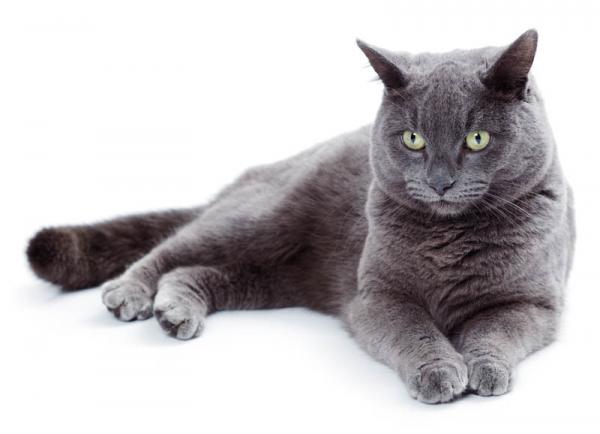
Azul Ruso
Como es la raza de gato Azul Ruso
Seccion: Como es la raza de gato Azul Ruso
Es una de las razas más antiguas que existe, los primeros ejemplares se exhibieron en la primera exposición de gatos en 1880 en el The Crystal Palace en Londres. El Azul Ruso también se conoce por su nombre ...
Dogo Guatemalteco
Estandar de la Raza Dogo Gualtemalteco
Seccion: Estandar de la Raza Dogo Gualtemalteco
Estandar de la Raza ...
Pastor de Brie
EL COLOR EN EL PELO DE LOS PERROS
Seccion: EL COLOR EN EL PELO DE LOS PERROS
La genética del pelo es una disciplina todavía mal conocida por los criadores. ...
Vacunas. ¿Si o No? Efectos nocivos.
Seccion: Durante los últimos años varias voces han venido advirtiendo de los efectos nocivos que ciertas vacunas pueden tener cuando son administradas a los perros (y gatos) y si bien muchas veces se basaban en eviden ...
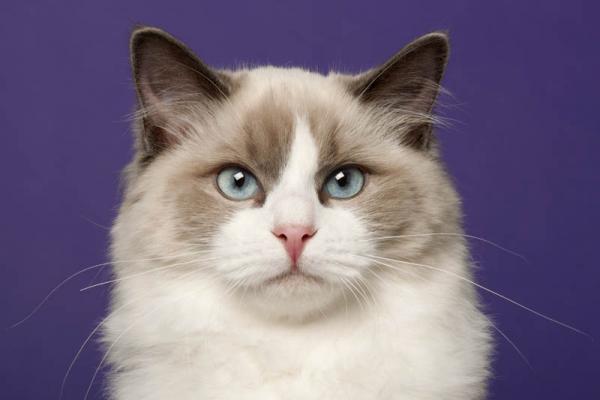
Ragdoll
Como es la raza de gato Ragdoll
Seccion: Como es la raza de gato Ragdoll
Es un gato grande y fuerte que crece lentamente, es decir, por etapas: primero se va alargando hasta que finalmente termina ensanchándose. Su peso oscila entre 5 y 9 kilos los machos y entre 3 y 5 kilos las he ...
Bullmastiff
El Arreglo de las Orejas
Seccion: El Arreglo de las Orejas
El correcto porte de las orejas de los Bullmastiff es una de las partes más importantes para la expresión y la apariencia típica de la cabeza. ...
Vacunas. ¿Si o No? La efectividad.
Seccion: En el artículo anterior analizamos algunas de las razones por las que las vacunas no siempre resultan efectivas y tambien los motivos por lo que cada vez hay mas personas reticentes a administrarselas a sus ma ...
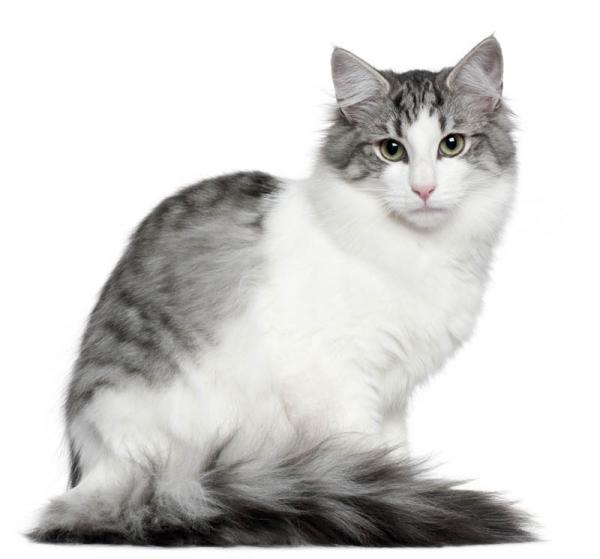
Bosque de Noruega
Como es la raza de gato Bosque de Noruega
Seccion: Como es la raza de gato Bosque de Noruega
Se cree que es una mezcla entre gatos de pelo corto del sur de Europa que migraron a los países escandinavos y otros gatos de pelo largo procedentes de Oriente Medio, aunque su origen es desconocido. Es una ra ...
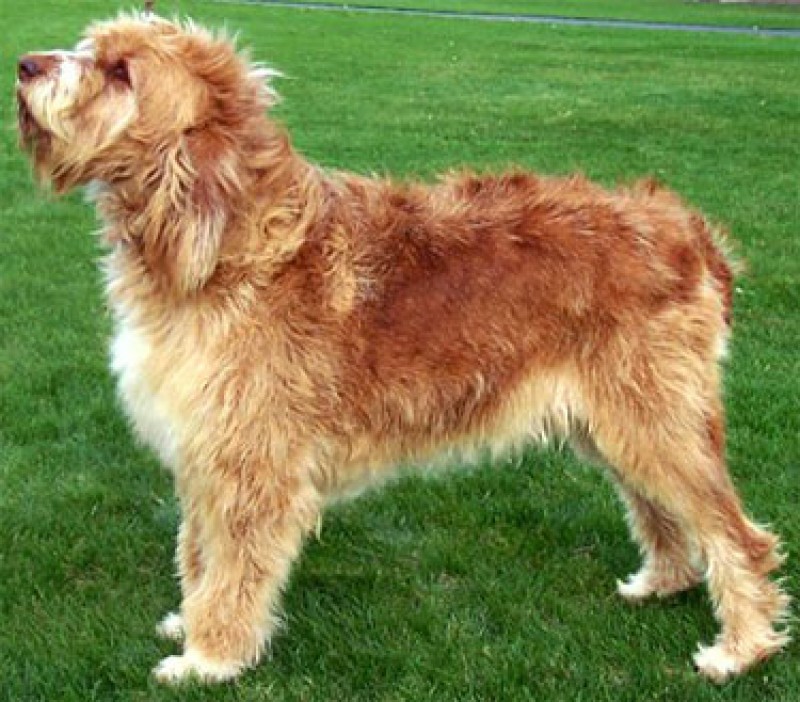
Perro de Nutria
Como es la raza de perro Perro Nutria
Seccion: Como es la raza de perro Perro Nutria
El Otterhound fue desarrollado en Inglaterra para cazar nutrias. La caza de nutrias se practicaba porque esquilmaban la población de los peces en los ríos y arroyos hasta el punto de acabar con la misma. La c ...
Vacunas. ¿Si o No? Efectos secundarios.
Seccion: La aparicion de una serie de casos de autismo infantil en niños que previamente habían sido vacunados con la trivalente (sarampion, paperas y rubéola) en el Reino Unido, desató los temores y la desconfianza ...
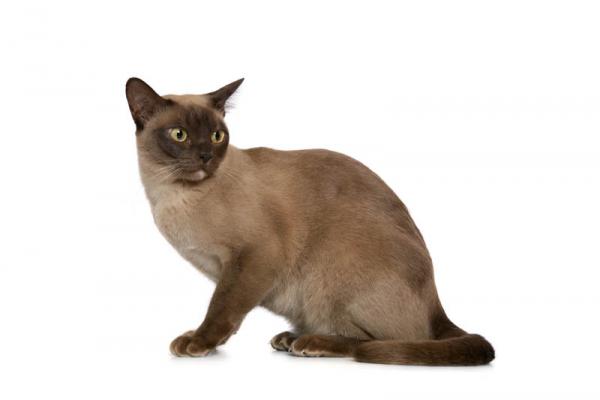
Burmés
Como es la raza de gato Burmés
Seccion: Como es la raza de gato Burmés
Hay cuatro variedades reconocidas de esta raza, todas tienen los ojos de color dorados a amarillos. ...
Jack Russell Terrier
Un perro grande encerrado dentro del cuerpo de un perro pequeño.
Seccion: Un perro grande encerrado dentro del cuerpo de un perro pequeño.
Agil, vivaracho (a veces demasiado), listo, fuerte, inteligente, muy alegre y a la vez muy sano y resistente. ...
Vacunas. ¿Si o No? La Revacunación
Seccion: Esta es una materia que no deja a nadie indiferente, que, en Estados Unidos, está propiciando importantes cambios en los protocolos de vacunación de las mascotas norteamericanas y que antes o despues llegará ...